


The Hidden Role of Lubrication in Stainless Steel Machining Performance
Stainless steel is widely recognized for its strength, durability, and corrosion resistance; however, achieving efficient machining performance remains a significant industrial challenge.
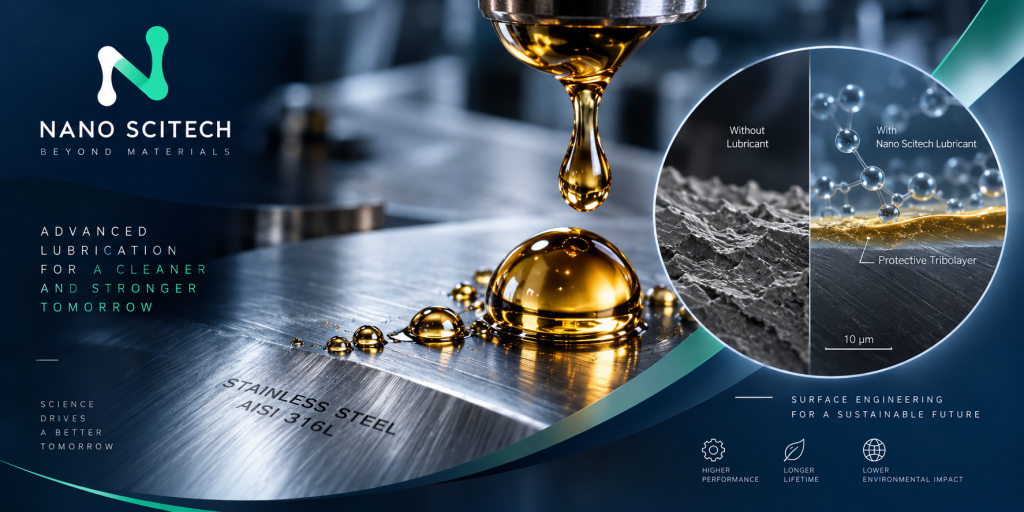
One critical factor that can significantly influence machining outcomes is the selection of an appropriate lubrication strategy. Scientific research on stainless steel machining has demonstrated that effective lubrication can contribute to reducing friction and heat generation at the cutting zone, minimizing cutting-tool wear, improving surface finish and surface integrity, supporting better machining accuracy, and reducing lubricant consumption through advanced approaches such as Minimum Quantity Lubrication (MQL).
Research on AISI 316L stainless steel has reported up to 21% lower tool wear with MQL compared with dry machining, while recent studies on martensitic stainless steel have demonstrated approximately 25% improvement in surface finish under optimized MQL conditions.
These findings highlight an important principle in modern manufacturing: lubrication is not simply a method for reducing friction. Instead, it represents an integral component of machining performance, product quality, and manufacturing efficiency.
For industries working with stainless steel, selecting an appropriate lubricant and lubrication method can directly influence the quality of finished components and the overall efficiency of production processes.
Understanding the interaction between lubricant characteristics, material behavior, and operating conditions is essential for developing more efficient and sustainable machining processes.
Keywords:
Tribology, Lubrication, Stainless Steel Machining, Minimum Quantity Lubrication (MQL), Wear Reduction
References
- Minimum Quantity Lubrication in Machining of AISI 316L Stainless Steel: Effects on Tool Wear and Machining Performance. Tribology International.
- Sustainable Machining of Martensitic Stainless Steel Using Minimum Quantity Lubrication: Effects on Surface Quality and Tool Wear. Scientific Reports.
Date: September 15, 2026
